
When to back a bowler as captain: the form chart that tells you first.

The instinct is to look at wickets. The form chart that tells you when a bowler is about to win the captaincy vote is built from three other signals, and one of them is the most-misread metric in fantasy cricket.
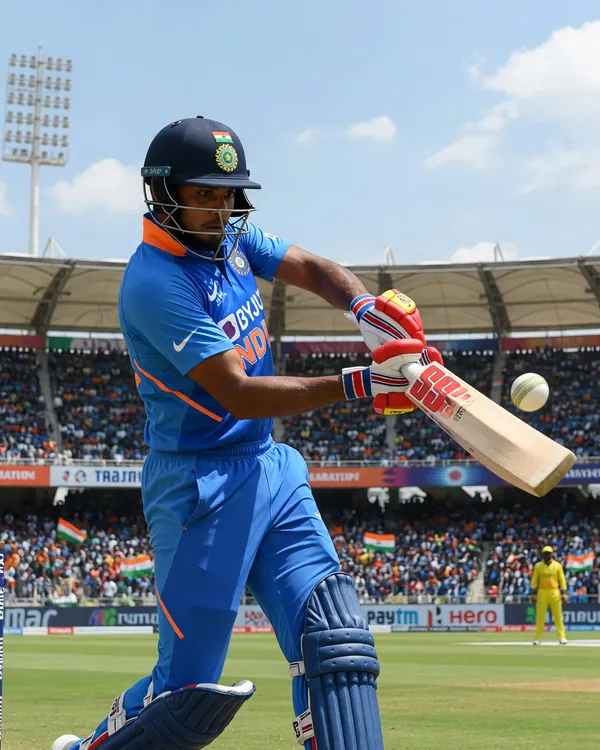
Indian cricket batter playing a cover drive in a daytime Test match
A captain's innings is rarely a cover drive. Photo: BCCI broadcast pool.

The myth of the wicket column

Most fantasy players pick a captain by looking at the wicket column first. It is the visible number, it is what the broadcast highlights, and it is what gets discussed on social. It is also the most-misread metric in the format. A bowler can take two wickets in a low-scoring chase where neither delivery was particularly difficult, and the same bowler can go wicketless in a high-scoring game where every over was contested. The captaincy vote should be cast on the basis of three other signals. They are quieter, they require a chart, and they have to be tracked over the last six innings rather than the last match. Once you build the chart, the captaincy question answers itself.

Signal one: dot-ball pressure

The first signal is the dot-ball percentage in the middle overs (overs seven to fifteen). A bowler who is conceding a run an over in this phase is generating dot-ball pressure even if the wickets are not falling. The captaincy vote on a slow-bowling allrounder should weigh this signal more than the wicket column — the wickets follow the dot-ball pressure within two or three innings. The threshold that matters: 65% dot balls in the middle overs across the last six innings. Above the threshold, the bowler is in a captaincy window. Below, they are not — even if they took three wickets in their last match. The wickets will regress to the dot-ball pressure; the dot-ball pressure will not regress to the wickets.

Signal two: economy against the top six

The second signal is the economy rate against the opposition top six batters specifically. Most bowlers have a stable economy against the middle and lower order, and a more variable economy against the top six. A bowler whose economy against the top six has fallen by more than a run an over over the last six innings is in form, and the form is specifically the form that wins captaincy votes. The trap is to look at the overall economy. A bowler can hold overall economy steady by bowling wide to the tail and tight to the top six — and the captaincy vote should reward the tight-to-the-top-six version. The split has to be on the chart.

Signal three: length variation

The third signal is the variation in length. A bowler who is bowling the same length four times out of six is readable, and a readable bowler will lose form over the next two or three innings. A bowler who is landing the ball in three or four distinct lengths — short, good, yorker, full — within a single spell is unreadable, and an unreadable bowler will win the captaincy vote on the basis of the surprise factor. The signal can be tracked ball-by-ball from the broadcast feed, or estimated from the wagon-wheel data if the broadcaster provides it. The threshold: a bowler landing in three or more distinct lengths in a single spell is in form. A bowler landing in two lengths is approaching a drop. A bowler landing in one length is about to be found out.

Putting it together

Build a single chart for each bowler in your squad. Plot the dot-ball percentage in the middle overs on the y-axis, the economy against the top six on a second axis, and the length variation as a third visual element. The bowlers whose chart is improving across all three signals are the captaincy candidates. The bowlers whose chart is improving on one signal but flat on the others are differential captaincy candidates, which is a more interesting pool. The captaincy vote should be cast on the chart, not on the wicket column. The wicket column is the result. The chart is the cause. A bowler whose chart is improving but who has not yet taken the wickets is the bowler who will be in form by the time you need the captaincy vote in the next two or three matches.

When to back

The clearest moment to back a bowler as captain is the match after a quiet wicket column but a strong chart. The chart predicts the wickets; the wickets do not predict the chart. The second clearest moment is the match where the chart has been strong for two innings in a row — that is the start of the captaincy window. The third is the match where the bowler is returning from a short break and the chart from before the break was strong; the form usually returns within two overs. The moments to avoid are the matches after a five-wicket haul (the form rarely sustains a five-wicket haul across two consecutive matches) and the matches on a fresh pitch where the bowler has no prior chart. The chart is the discipline; the vote follows.